





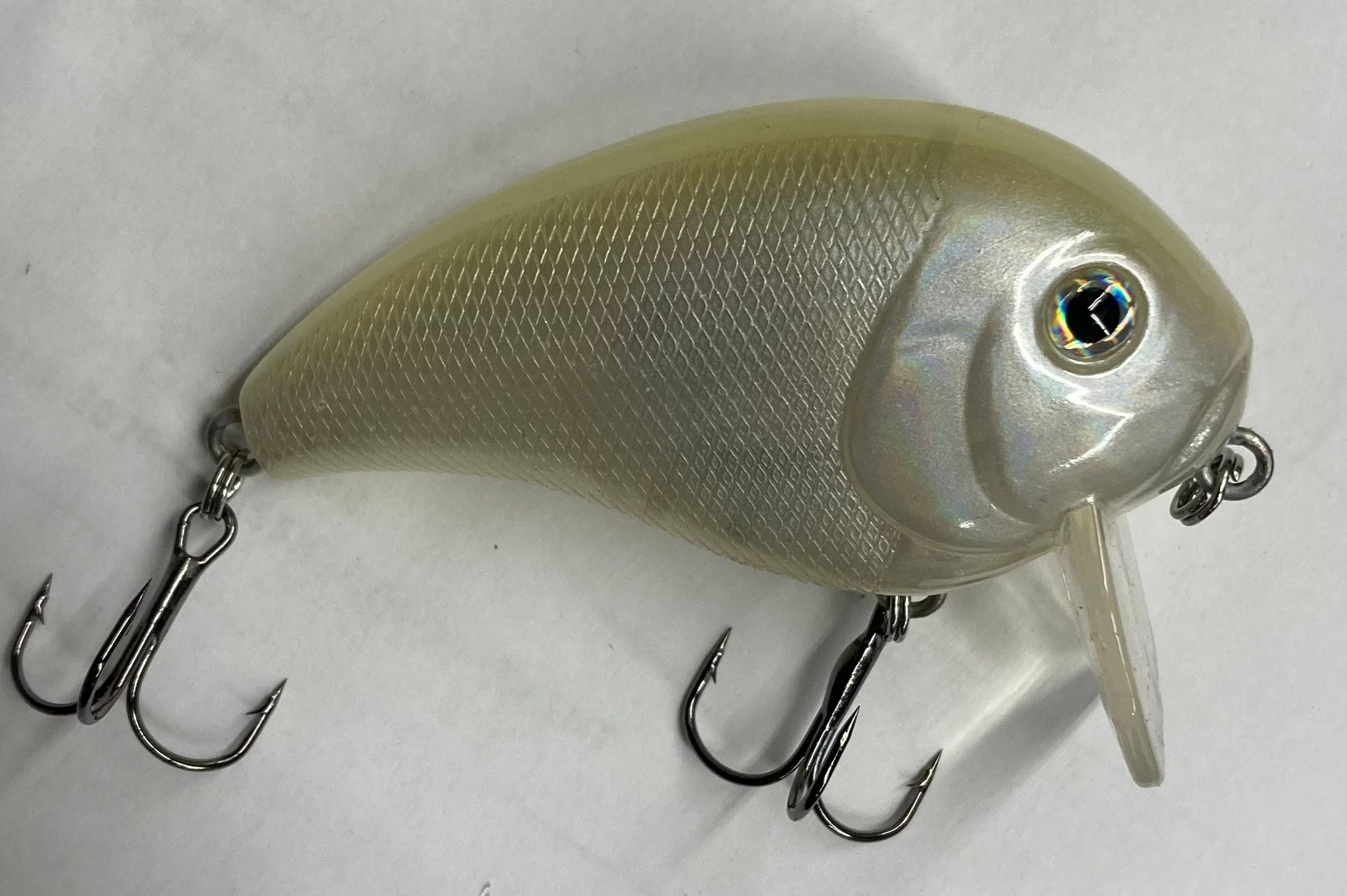

What the action looks like
Wide, rolling “wake” – Instead of a tight wobble, the egg shape displaces a lot of water, creating a pronounced V‑shaped surface wake.
Subtle side‑to‑side roll – The lure rocks around its long axis more than it yaws left and right, giving it a “lazy” or “thumping” presence.
High‑floating, nose‑up posture – Most egg wake baits ride high in the water, keeping the back half pushing water while the nose barely breaks the surface.
Minimal splash – Compared to prop baits or ploppers, the action is quiet and smooth, mimicking a cruising baitfish or small mammal.
Why the egg shape works
Rounded cross‑section increases water resistance, which:
Slows the bait naturally
Amplifies surface displacement
Centered mass promotes stability, preventing blow‑out at slow to medium retrieves.
No sharp edges means the lure doesn’t “hunt” aggressively—fish track it by feel more than flash.
Best retrieve styles
Slow and steady (most effective) Just fast enough to keep the bait waking. This is where egg shapes shine.
Dead‑slow crawl in low light Dawn, dusk, overcast, or night—let the wake do the work.
Occasional micro speed‑ups A brief acceleration can trigger followers, but too much speed usually kills the action.
When egg‑shaped wake baits excel
Calm to lightly rippled water
Pressured fisheries where fish shy away from noisy topwater
Post‑spawn and summer nights
Around banks, grass edges, docks, and laydowns
Compared to other wake baits
Vs. coffin or flat‑sided wakes: less hunting, more roll
Vs. jointed wakes: smoother and quieter
Vs. plopper/prop: subtle, natural, less commotion
Tuning tips
Line tie slightly down → more roll and stronger wake
Line tie slightly up → straighter, calmer action
Heavier rear hook → deeper tail dig and wider wake
